Candidates in school librarian preparation programs are actively engaged in leadership, collaboration, advocacy, and professional networking. Candidates participate in and lead ongoing professional learning. Candidates advocate for effective school libraries to benefit all learners. Candidates conduct themselves according to the ethical principles of the library and information profession. (American Association of School Librarians (2019). ALA/AASL/CAEP school librarian preparation standards. ALA.)
Leadership, Advocacy, and Professional Responsibility
Throughout my master’s program, I have grown in leadership, advocacy, and professional responsibility by applying what I’ve learned in my coursework. Through projects and assignments, I have engaged in professional development, collaborated with others, and taken on leadership roles that support both students and teachers. My work also reflects my ability to advocate for equitable access to resources and model ethical practices in librarianship. Overall, these experiences show how I am prepared to contribute to a strong, effective school library program that benefits all learners.
Advocating
&
Professional Development
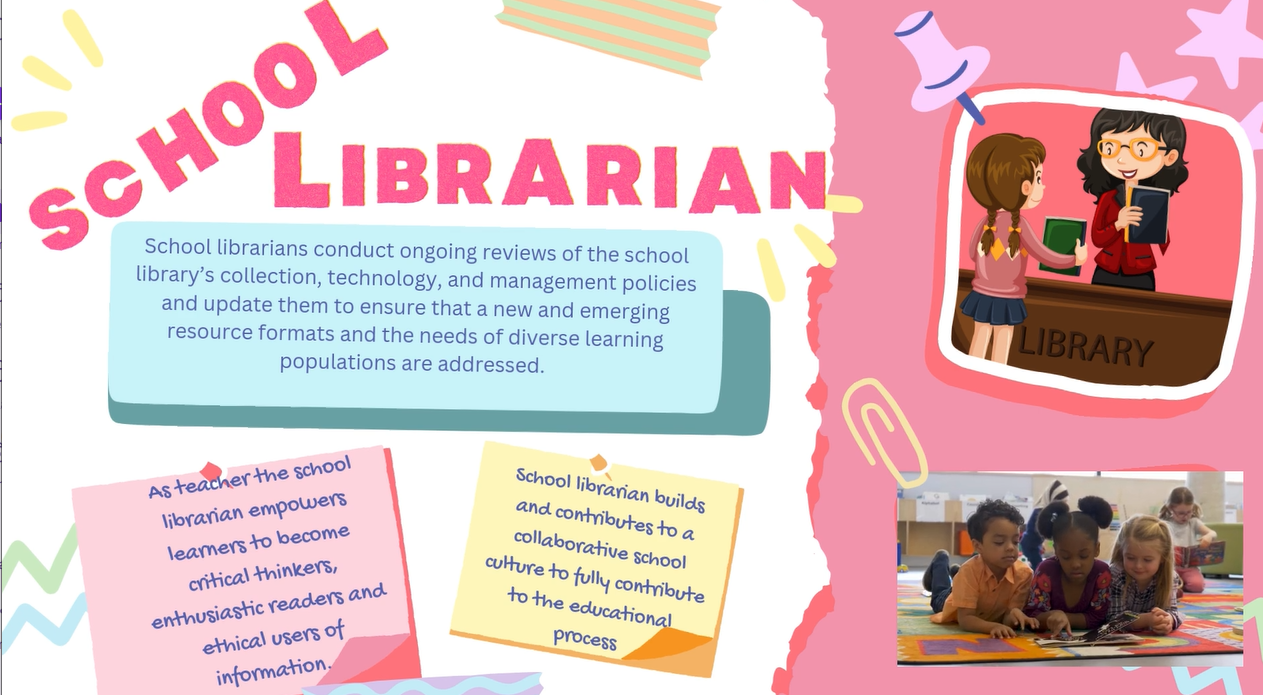
I created a short presentation for my SLIB 500 role presentation assignment to explain three important roles of a school librarian and advocate for the library to the PTA. In this presentation, I highlighted the role of the school librarian as a teacher, an information specialist, and an instructional partner. I explained how the librarian serves as an information specialist by using technology tools to supplement school resources and support the creation of engaging learning experiences. Additionally, I described the librarian’s role as an instructional partner, collaborating with classroom teachers to develop assignments that align with academic standards and promote critical thinking skills.
Professional Learning
&
Ethical Practice
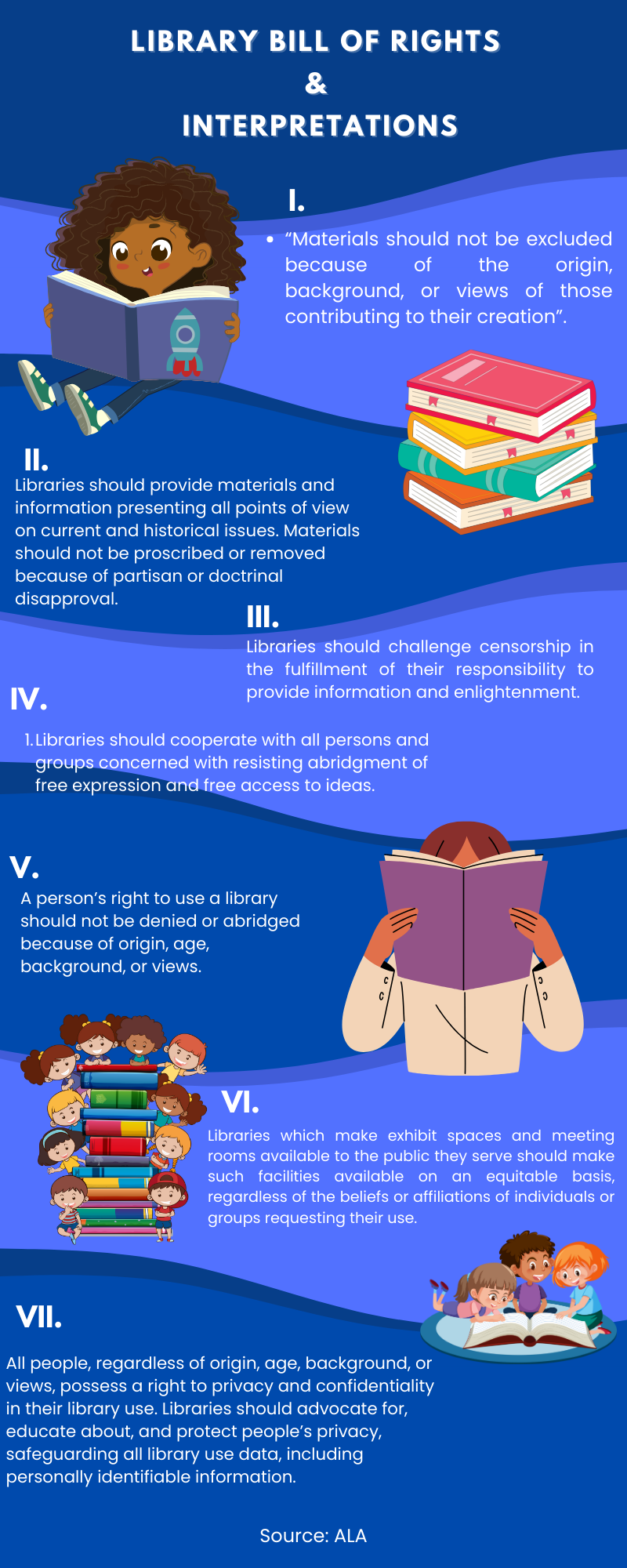
In SLIB 510, I created an infographic to highlight the Library Bill of Rights as a way to explain the importance of intellectual freedom and equitable access to information for all students. I will use the infographic to model and promote the ethical practices of librarianship.
In SLIB 571, I created a document that provides an overview of special education identifications and explains how instruction can be differentiated to meet the needs of diverse learners. This highlights the importance of recognizing that students learn in different ways.